Bedding Guide
How to Choose a Down Comforter for Year-Round Use
A comforter’s warmth is not captured by a single specification. Fill power describes how loftily down traps air; fill weight tells you how much of it is inside. Add construction, shell fabric, bedroom temperature and personal layering habits, and the decision becomes more useful—and more individual.
A down comforter can feel wonderfully light and still provide substantial warmth. It can also carry an impressive fill-power number yet leave a cold sleeper reaching for another blanket. The reason is simple: warmth comes from a system of interacting features, not one headline figure.
For year-round use, the right choice depends on what happens in your bedroom as much as what is printed on a product label. A well-insulated home, a cool room with an open window, a humid summer climate and a drafty winter bedroom are different environments. So are the needs of someone who sleeps warm and prefers a sheet, compared with someone who likes a duvet tucked close around the shoulders.
Understanding fill power, fill weight, construction and shell fabric can make product descriptions easier to interpret. The aim is not to find the warmest comforter available. It is to find one that suits the room, the sleeper and the way bedding is used through changing seasons.
Start with the room, not the label
Before comparing down specifications, consider the conditions in which the comforter will be used. Bedroom temperature is shaped by climate, insulation, heating and cooling, window exposure, floor level and airflow. It may also vary considerably between seasons—or between the beginning and end of a single night.
Think about your usual sleep experience. Do you wake warm and push covers aside? Do you often feel cold at your feet? Does your room stay close to the same temperature all year, or does it become markedly cooler in winter? Your answers help define the warmth range to look for and whether one comforter can realistically serve every season.
“Year-round” does not mean that one comforter will feel identical in every climate or bedroom. It means selecting a layer versatile enough for your conditions and habits. In a stable, moderate-temperature room, a medium-warmth option may work through much of the year. In a home with pronounced seasonal changes, a lighter comforter paired with removable layers may offer more control.
- Warm bedroom: A lighter comforter, breathable shell and simple sheet layering may help avoid excess insulation.
- Cool bedroom: A warmer construction or a flexible combination of comforter and coverlet may be more comfortable.
- Variable room temperature: Removable layers let you adapt without relying on one heavy, fixed layer.
- Shared bed: If sleepers differ in temperature preference, separate blankets or a lighter shared comforter with individual layers can reduce compromise.
These are starting points, not universal rules. A person’s temperature preference, bedding, sleepwear and movement during the night all affect perceived warmth. Product ratings should guide comparison, but your actual room and routine are the final test.
Fill power: the loft of the down
Fill power measures the volume occupied by a given weight of down under a standardized test. In practical terms, it indicates loft: how much space the down can fill relative to its weight. Loft matters because down’s fine clusters create pockets of still air, and those pockets help slow the loss of body heat.
Higher fill power generally means a given weight of down can expand to a greater volume. That can allow a comforter to achieve a lofty feel with less fill by weight. It does not, on its own, tell you exactly how warm the finished comforter will be. A high-loft comforter with relatively little fill may provide less insulation overall than its impressive number suggests.
For this reason, fill power is best treated as one piece of information about the down, not as a warmth score for the entire comforter. Two comforters with the same fill power can differ in size, fill quantity, quilting pattern and intended warmth. Those details influence how the down is distributed and how much insulating material surrounds the sleeper.
Fill power can also shape the comforter’s character. A loftier fill may feel airy and buoyant, while another comforter may feel more compact or substantial. Neither sensation automatically means better sleep. The preferred balance depends on whether you want a cloudlike drape, a closer-to-the-body feel or a particular level of coverage.
Fill weight: how much insulation is inside
Fill weight is the total weight of down placed inside a comforter. It gives a more direct indication of how much insulating material the comforter contains, though comparisons only make sense when the dimensions and other specifications are similar.
A larger comforter will naturally require more fill than a smaller one to achieve a comparable feel. Likewise, the same quantity of down can behave differently depending on its fill power and how the comforter is constructed. Fill weight should therefore be considered alongside size, fill power and the maker’s stated warmth category.
When comparing two options, look for the complete specification rather than trying to infer warmth from a number in isolation. Ask whether the listed weight applies to the full comforter, whether sizes differ, and whether the maker identifies the product as lightweight, medium or warm. If a specification is unclear, the manufacturer or retailer may be able to explain it.
A useful distinction
Fill power describes loft per unit of down. Fill weight describes the total amount of down. Together, they help explain the comforter’s potential volume and insulation, but neither fully predicts how warm it will feel in a particular bedroom.
In broad terms, more fill can mean more insulation, but comfort is not a contest in maximum weight. Too much warmth can interrupt sleep just as surely as too little. A suitable comforter balances insulation with the sleeper’s temperature preference and the room’s climate.
Construction determines how warmth is distributed
Down must stay evenly distributed to perform consistently. Comforter construction helps control its movement and creates the spaces in which the fill can loft. Two common approaches are sewn-through construction and baffle-box construction.
Sewn-through construction
In a sewn-through comforter, the top and bottom shell fabrics are stitched together at intervals. These seams form compartments that limit fill movement. The construction can create a lighter, less bulky comforter, but the seams join the two sides directly. In those narrow areas, there is little or no down between the body and the room, which can make the warmth less uniform.
Baffle-box construction
A baffle-box comforter uses internal fabric walls between the top and bottom shells. Those walls create three-dimensional compartments that give down more room to expand. This helps preserve loft across the panels and can reduce cold spots associated with compressed seams. Baffle construction is often used in comforters designed for greater loft, though the finished warmth still depends on fill quantity, size and other factors.
Neither construction is automatically right for every sleeper. A lighter comforter with sewn-through compartments may suit a warm room or a person who prefers less volume. A baffle-box design may appeal to someone seeking more loft and a more even distribution of insulation. Stitching quality, compartment size and the amount of fill in each section also matter.
Look for practical clues in the product description: named construction, compartment design and any guidance about intended warmth. A close, regular pattern may hold fill in place, while larger compartments can allow more expansion. If the comforter is used on a larger bed, check that its dimensions provide adequate coverage for the mattress and for the way you sleep.
The shell fabric is part of the experience
The outer shell holds the fill in place and sits between the sleeper and the down. Its weave, fiber and finish influence the way the comforter feels, drapes and allows air to move. A tightly woven shell is commonly used to help keep fine fill from escaping, while the fabric’s hand and weight affect how the comforter settles over the body.
Shell fabric can change the impression of warmth. A heavier or less breathable-feeling cover may feel warmer to some sleepers, while a lighter, airier fabric can feel less enclosing. That does not make the shell a substitute for choosing the right fill and construction, but it is part of the complete bedding environment.
Consider the comforter together with its duvet cover. A cover adds another layer of fabric, affecting texture, drape and the way heat is retained. If you already use a substantial cover, you may not need the same level of insulation as someone using a very light cover—or no cover at all. The sheet beneath the comforter and the sleepwear worn at night can also shift the balance.
For easy care, review the manufacturer’s instructions before buying. Down comforters can require ample room to wash and dry properly, and some may be better suited to professional cleaning. A cover that can be laundered routinely helps protect the comforter and may reduce how often the insert itself needs cleaning.
Read warmth ratings with care
Some makers use warmth labels such as lightweight, all-season or winter weight. These terms can be helpful within a single brand’s collection, but they are not always standardized across the bedding industry. “All-season” may mean a medium option in one range and a lighter or heavier one in another.
Use a warmth label as a first filter, then inspect the supporting details. Check the comforter’s size, fill power, fill weight and construction. If possible, compare products from the same range, where terminology and sizing are more likely to be consistent. When specifications are not published, ask for clarification rather than assuming that a familiar label has a universal meaning.
Also distinguish between a maker’s stated warmth category and a personal guarantee of comfort. Labels describe design intent; they cannot account for the precise temperature of your room, your metabolism, your bedding layers or whether you sleep alone. A comfortable fit may require a period of adjustment as you learn how the comforter behaves in your home.
One adaptable comforter or seasonal alternatives?
There are two sensible ways to manage changing weather. One is to choose a versatile comforter and alter the layers around it. The other is to use separate comforters for warmer and colder parts of the year. The better approach depends on the scale of your seasonal change, available storage and how much flexibility you want.
The adaptable-layer approach
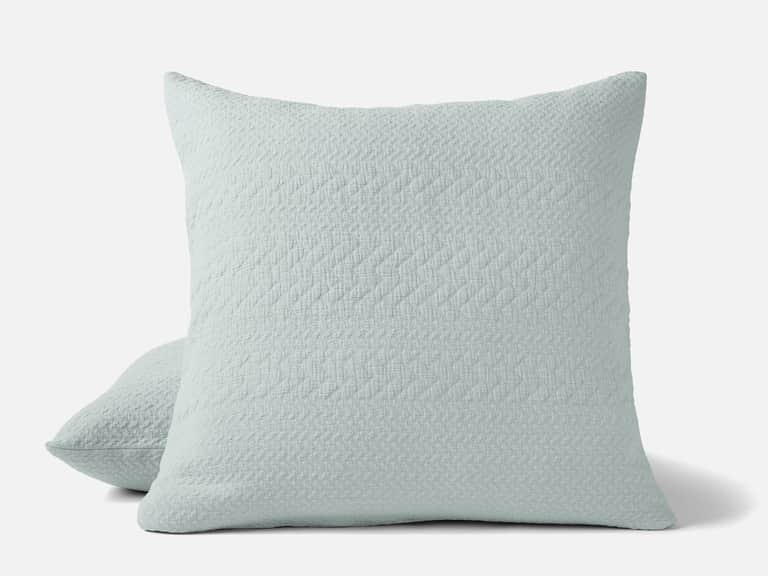
A moderate-warmth down comforter can serve as the central layer, with lighter bedding added or removed as conditions change. A breathable sheet and a thin coverlet can make a bed feel different without replacing the main comforter. For example, a cotton matelassé layer such as the Pescadero Organic Matelassé Coverlet is designed to be used on its own or paired with a duvet; it illustrates how a lighter textile can add a removable layer. It is not a down comforter, but it can be part of a flexible bedding arrangement.
This strategy is most practical when room temperatures vary moderately and the sleeper is comfortable adjusting layers. It also makes it easier to respond to an unexpectedly warm night without changing the main insert.
The seasonal-comforter approach
If summers are hot and winters are cold, separate lighter and warmer comforters may provide more precise comfort. It requires storage space and a little more planning, but each insert can be selected for a distinct role. This approach may also work well for people whose sleep temperature changes sharply with the seasons.
A third possibility is a modular arrangement if a maker offers compatible layers designed to connect. Check that fastening systems are secure and that the combined arrangement is meant for use together. Improvised combinations can shift, bunch or become warmer than expected.
A practical comparison checklist
Before choosing, gather the details that affect the comforter as a whole. A short checklist can prevent one appealing specification from overshadowing the rest.
- Room conditions: Note typical nighttime temperatures in the bedroom, not only the outdoor forecast.
- Sleep preference: Consider whether you tend to sleep warm, cold or somewhere between, and whether you like a light or enveloping feel.
- Fill power: Use it to understand the down’s loft potential, not as a stand-alone warmth rating.
- Fill weight: Compare it alongside comforter dimensions and fill power.
- Construction: Check how compartments are formed and how the design may affect loft and fill distribution.
- Shell and cover: Account for the comforter’s fabric and any duvet cover you plan to use.
- Warmth guidance: Read the maker’s category, while remembering that labels can vary between brands.
- Care and storage: Make sure you can follow washing, drying and storage instructions.
- Ethical and material standards: If important to you, look for clear information about fill sourcing, animal-welfare standards and textile certifications.
- Size and drape: Confirm that dimensions suit the mattress and provide the desired coverage.
Care helps preserve loft and performance
Even a well-chosen comforter needs appropriate care. Follow the care label, use a duvet cover where suitable and avoid compressing the insert in storage for long periods. Down relies on loft to create insulating air pockets; persistent compression can make it difficult for the fill to regain its full volume.
When airing the comforter, follow the manufacturer’s guidance and protect it from damp conditions. If washing is permitted, ensure that the comforter can move freely and that it is dried thoroughly. Incomplete drying can leave moisture inside the fill. If the care instructions recommend specialist cleaning, that direction is safer than experimenting with a home washing method that may be unsuitable for the size or construction.
Use a duvet cover to reduce exposure to body oils, dust and everyday soil. Periodically check for shifted fill, loose stitching or areas that no longer loft as expected. These observations can help you distinguish normal settling from a problem that needs attention.
Common mistakes to avoid
- Choosing by fill power alone. High loft does not reveal the total amount of down or the finished comforter’s warmth.
- Assuming heavier always means better. Extra insulation can make a bedroom uncomfortably warm and reduce the usefulness of a comforter in mild weather.
- Taking “all-season” literally. The term is not a universal standard and may not match your climate or personal preference.
- Ignoring the duvet cover. The cover and sheets contribute to how the complete bedding system feels.
- Comparing different sizes as if they were identical. Fill weight and drape need to be considered in relation to the comforter’s dimensions.
- Overlooking care requirements. A comforter that is difficult to clean or store may not suit your household, even if its warmth is appealing.
The best choice is a balanced one
Choosing a down comforter for year-round use is an exercise in balance. Fill power explains how much loft the down can produce for its weight. Fill weight indicates how much down is present. Construction determines how that fill is held and distributed, while the shell and duvet cover shape the comforter’s contact with the sleeper. Bedroom temperature and personal preference determine whether the result feels right.
Start with your room and your habits, then use product specifications to narrow the field. If your climate is moderate, a versatile comforter paired with removable layers may be enough. If seasons bring major temperature swings, separate weights may offer better control. In either case, do not let one number make the decision for you.
A comforter earns its place through the nights it helps you sleep comfortably—not through a label alone. The most useful choice is the one whose insulation, construction and care requirements make sense for the home it will serve.