Understanding Matelassé Weave: Techniques, Uses, and Care Across Top Bedding Brands
Matelassé is more than a texture; it is a language spoken in the quiet drama of a bedroom. The raised patterns,
the stitched ground, the way the weave breathes and folds—these details tell a story of craft, history, and
modern interpretation. From the French roots of the technique to its refined manifestations in Vispring, Aireloom,
Sferra, and Coyuchi, matelassé bedding remains a benchmark for texture-rich luxury. This article dives into what
matelassé is, how different brands implement the weave, and practical guidance for selecting, layering, and caring
for matelassé pieces. Along the way, we meet three influential figures across time who shaped textile thought and
practice, illustrating how matelassé weaves connect centuries of craft to contemporary bedrooms.
What is Matelassé? A Double-Weave, Textural Poem
Matelassé, at its core, is a double-weave technique that creates a raised pattern on a ground that remains soft and
pliable. The texture resembles a quilted surface but is achieved not by added batting or padding, but through an
ingenious interlacing of warp and weft threads. The result is a fabric that feels both structured and breathable—
a subtle sculpture for the bed.
In historical terms, matelassé has long been associated with European textile workshops, where masters
explored pattern depth, edge finish, and hand. Today, modern iterations continue to honor that heritage while
embracing contemporary fibers, trim details, and finishes. The double weave gives matelassé its signature
dimensionality: the pattern rises from a ground with a tactile, almost architectural presence.
Weave Structure and Its Effects on Draping and Durability
The weave structure is not merely a visual cue; it determines how a piece drapes on the bed, how it insulates,
and how it wears over time. Denser matelassé weaves can yield a crisper hand with more pronounced texture, while
lighter variants offer a more relaxed silhouette that layers easily with duvets and other bedding components.
Across top brands, you’ll notice variations in fiber content, pattern density, and finish. Sferra’s Alice Coverlet, for
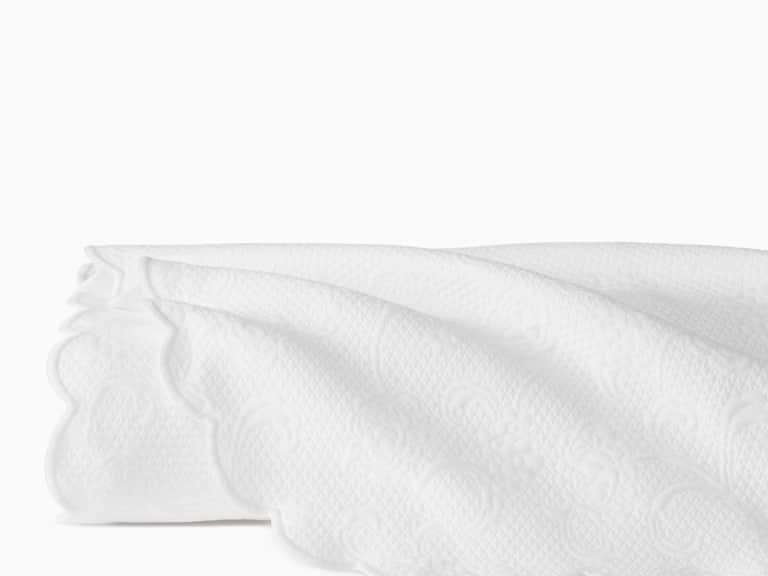
instance, showcases a subtle raised floral and vine motif with scalloped edges that read as timelessly elegant. Coyuchi’s
Pescadero Organic Matelassé Coverlet emphasizes organic cotton and a drapey sateen face—with a gauzy reverse—giving
it a natural, breathable character suitable for layering in different seasons.
Practical Tips: Choosing Matelassé Bedding
Fiber content matters: Cotton matelassé is breathable and easy to care for, while blends can alter hand and warmth. Organic cotton variants—like those from Coyuchi’s Pescadero line—offer environmental assurances without sacrificing texture.
Weave density and pattern: A densely woven matelassé with a busy pattern will feel more substantial and create a stronger visual texture; a lighter weave will appear more airy and drapey.
Finish and edges: Look for knife-edge or scalloped hems and neat mitered corners. The finish affects how the piece nests with pillows and other layers.
Care considerations: Most matelassé linens prefer gentle cycles, cold to warm washes, and avoiding fabric softeners that can coat fibers and dull texture. Drying on low heat helps preserve the pattern and prevent excessive wrinkling.
Layering strategy: Use matelassé as a top layer or a bed-ready coverlet. Pair with crisp percale sheets for contrast, or with sateen for a luxe, unbroken texture.
Historical Roots and Modern Reinterpretations
Matelassé’s lineage is rooted in European textile traditions—where weaving was both a practical craft and an art form. In
the early to mid-20th century, matelassé gained a reputation for its decorative yet durable appeal, frequently seen in
high-end bedding and upholstery. Today, designers reinterpret the technique, preserving its essence while expanding
material choices, finishes, and ethical manufacturing stories.
The modern narrative often centers on sustainability, provenance, and craft. Brands highlight where fibers are grown,
where weaving occurs, and how dyes and finishes align with environmental standards. This makes matelassé not only a
tactile delight but a product of thoughtful, accountable production.
Matelassé Across Top Bedding Brands: A Comparative Lens
Vispring, Aireloom, Sferra, and Coyuchi—all known for their luxurious offerings—each interpret matelassé with distinctive
philosophies. The variations reveal how a single weave can become a canvas for design language, fiber strategy, and brand
storytelling.
Vispring and Aireloom: Heritage Craft with Refined Texture
Vispring tends to foreground craftsmanship and legacy—an approach that translates into matelassé pieces with generous
texture and meticulous finishing. Aireloom, known for its meticulous construction and padding philosophy, often pairs
matelassé surfaces with a soft, resilient hand that signals a premium sleep experience. The common thread is
tactile depth that remains elegant through countless launderings.
Sferra and Coyuchi: Contemporary Luxury with Ethical Signals
Sferra’s take, as seen in the Alice Coverlet, embraces a sculptural silkiness within a cotton matelassé ground and a
refined scalloped edge. Coyuchi, with its organic and GOTS-certified offerings like Pescadero, emphasizes sustainability
and the sensory pleasure of natural fibers. The pairing of texture with organic credentials has become a powerful narrative
in modern bedding.
A Practical Guide to Care: Keeping Matelassé Texture Fresh
Texture is delicate and resilient in equal measure. For matelassé bedding, a careful care routine preserves the weave’s depth
and prevents flattening of raised patterns.
Wash in cold or warm water on a gentle cycle to protect the fiber structure.
Avoid fabric softeners and optical brighteners that can dull the raised pattern and reduce airflow.
Tumble dry on low or line dry to minimize heat impact and maintain dimensional stability.
Ironing, if desired, should be done on a low heat setting, with steam kept to a minimum to avoid crushing the pattern.
Aesthetic Pairings: Sheets, Pillows, and Accessories
Matelassé’s texture invites thoughtful pairing. Crisp percale sheets can provide a high-contrast backdrop that makes the raised
motifs pop, while a sateen sheet set creates a more enveloping, luxurious feel. Pillows and shams in complementary tones or subtle
glows of color reinforce the bed’s architectural rhythm without competing with the matelassé’s pattern.
Key Figures in Textile History: Three Individuals Across Time
Texture, technique, and taste are not born in a vacuum. Three influential figures illuminate how matelassé and related dressings
of fabric intersect history, craft, and design sensibility.
Marie-Antoinette’s Tapestry Rooms (18th Century)
Though not a designer by trade, the era’s textile enthusiasm, courtly taste, and patronage of elaborate textile
decoration shaped modern notions of luxury bedding finishes. The rooms of the late Ancien Régime favored depth of texture
with layered fabrics, setting a historical precedent for bed coverings that “read” as architecture in fabric form.
William Morris and the Arts and Crafts Movement (Late 19th Century)
Morris’s designs celebrated handcraft, pattern, and texture, elevating textiles to a visual and tactile art. The
emphasis on weaving motifs and natural forms anticipated later explorations of textured bedding and regional textile
techniques—an intellectual ancestor to matelassé’s enduring narrative of handwoven sophistication.
Sferra and the Modern Luxury Textile Era (20th–21st Century)
In a late-20th-century to contemporary frame, Sferra and similar houses crystallized the modern matelassé aesthetic:
refined surfaces, edge finishes, and a global sourcing story that united European weaving with global fibers. Their approach
demonstrates how matelassé can remain both timeless and currently relevant.
Featured Product: Alice Coverlet
Alice Coverlet
Matelassé cotton coverlet woven in Portugal with a subtle raised floral and vine pattern and scalloped edges. The plain hem
and scalloped finish deliver a clean silhouette suitable for layering with a range of textiles.
Material: 100% Cotton
Construction: Matelassé; plain hem with scalloped edges
Origin: Portugal
Care: Machine wash cold; do not bleach; do not use fabric softener; wash dark colors separately; tumble dry on low heat
Price: $291.00
Styling Scenarios: How to Layer Matelassé with Confidence
A matelassé piece shines when thoughtfully integrated into a broader sleep space. Consider three scenarios:
Pair a matelassé coverlet with crisp percale sheets and a few coordinating shams to emphasize the texture. The Alice Coverlet, with its scalloped edge, can anchor a bed’s look without overpowering other textile choices.
Combine matelassé with a solid, smooth duvet cover for dynamic contrast. A pale neutral matelassé atop darker sheets creates depth and a refined silhouette.
In warmer months, use matelassé as a light top layer; in cooler seasons, layer a complementary blanket beneath for warmth without sacrificing texture.
Glossary of Terms and Quick Reference
To navigate matelassé and related fabrics, a few terms help keep the conversation precise:
A double-weave technique creating a raised pattern on a ground fabric.
The base layer on which the pattern is woven; contributes to hand and drape.
Sateen offers a soft, lustrous surface; percale provides a crisper, matte finish and cleaner weave.
Global Organic Textile Standard; a seal of organic fiber production and processing.
Finishing details that affect the bed’s silhouette and durability.
In the matelassé family, a single weave becomes a landscape—patterns emerge, retreat, and re-emerge as a bed’s
center of gravity. The bedding choices we make are not only about comfort but about an ongoing dialogue between
fabric history and contemporary home life.
Luxuriously soft matelassé cotton that breathes and drapes beautifully, woven in Portugal for lasting texture. It layers easily, stays crisp, and adds a subtle floral touch with scalloped edges—perfect for cozying up any bed. Easy care for everyday ease.
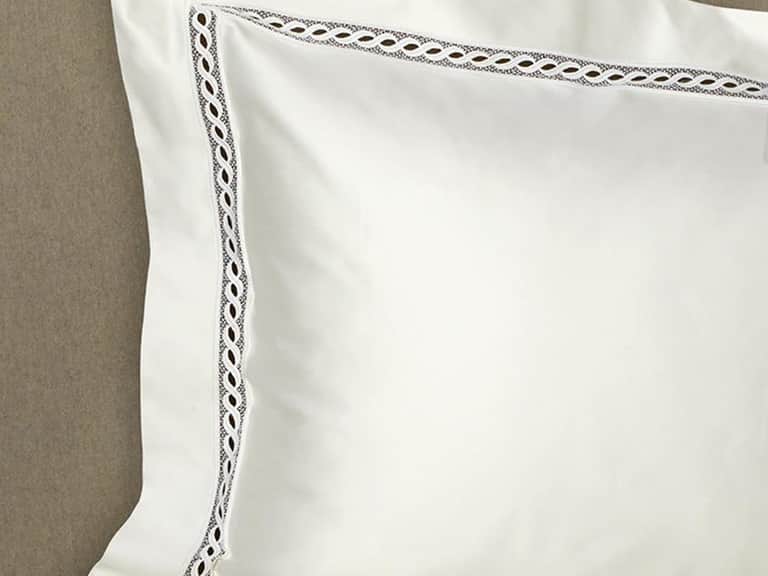
Luxuriously soft, this 100% extra-long-staple cotton sham feels substantial yet breathable, with a refined Italian lace inset and four-sided flange for a clean, polished look that elevates any bed.
Feel the soft, dimensional matelassé texture in pure organic cotton—lightweight, durable, and easy to care for. Woven in Portugal, with knife-edge seams and a tidy envelope closure, it stays smooth wash after wash while soothing, long-lasting comfort. GOTS certified.